Introduction
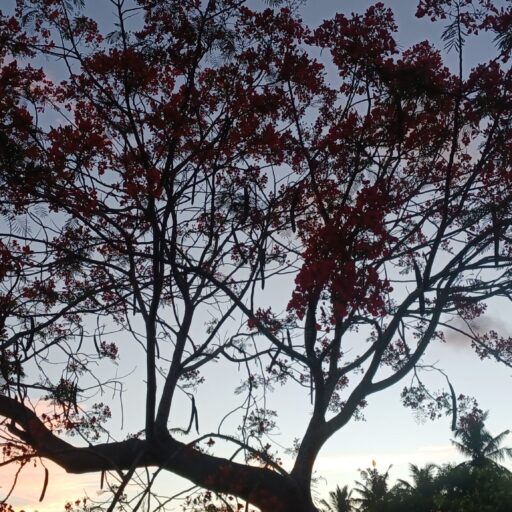
Kadamba is one of the most commonly planted tree is along avenues, road side and village for shade. The tree is highly regarded religiously and culturally in India. It is a large tree with broad crown and straight cylindrical bole. It is grown as an ornamental plant. It shades large amount of leaf and non leaf litter which on decomposition improves some physical properties of soil under its canopy. Growing a kadamba tree is simple when the right climate, soil and care are provided. It is an evergreen tropical tree native to south and southeast Asia. The rate of growth is very rapid in the earlier years upto 2meter per year. It is commonly seen in swampy ground along river and prefers a well drained alluvial soils. It is a fast growing and suitable for reforestation in watershed and eroded areas. Requires more sunlight and will not grow in shade. It regenerate well even if the branches are pruned annually for fodder.
Family
The Plant belonging to Rubiaceae family.
Scientific Name
Neolamarckia cadamba
Commmon Name
Neolamarckia cadamba, wild cinchoana, Burflower tree, laraan, Leichhardt pine, Kadamba, Kadam
Tree height
Kadamba is a large handsome tree that can grow more than 10m tall.
Stem
The stem is staright, cylindrical and strudy trunk that can grow upto 45meter tall with a diamter of 100-160cm, feturing broad, spreading branches. The bark is grey and rough, while the wood is white to light yellow becoming creamy yellow on exposure.
Leaves
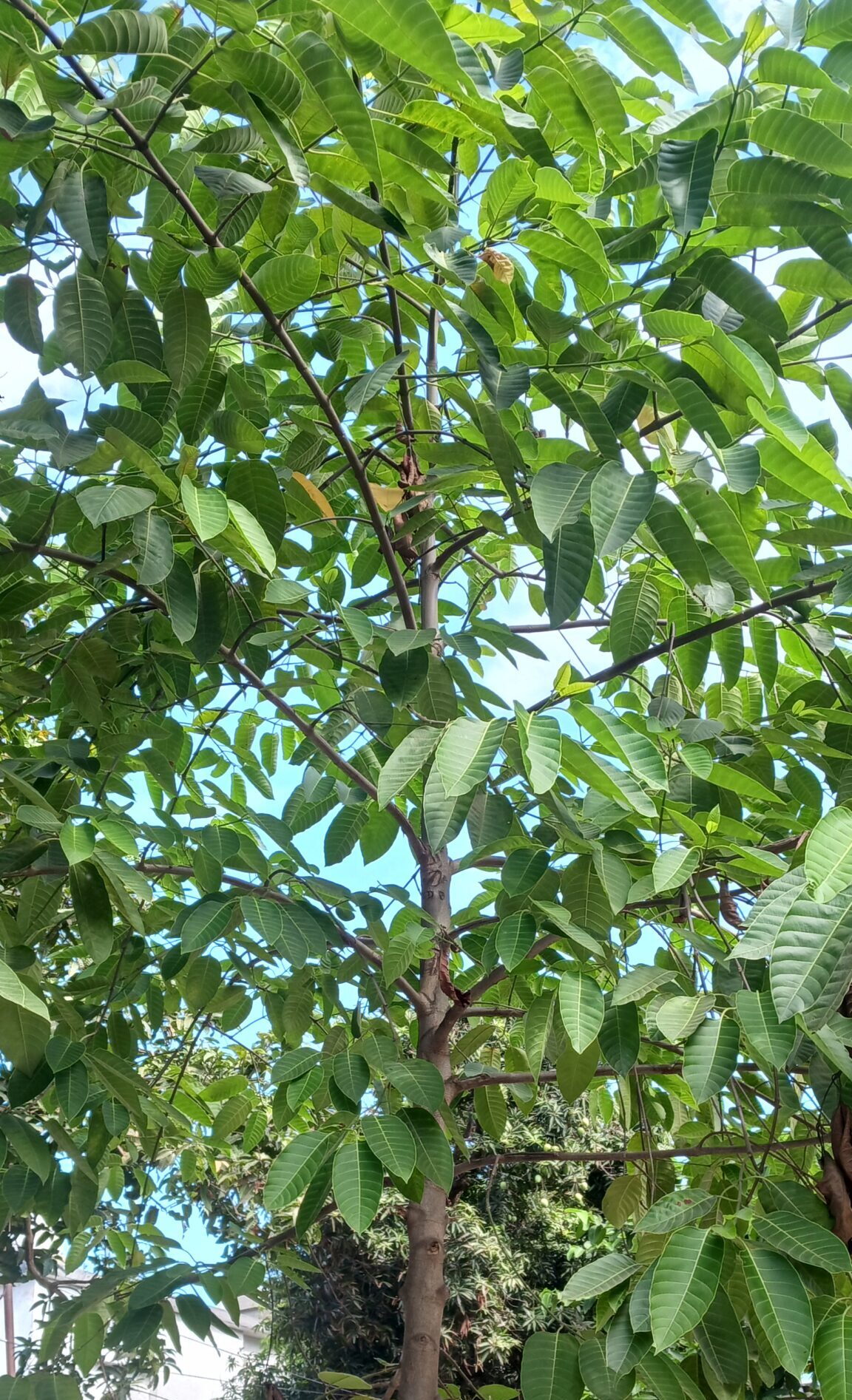
The leaves are large , glossy and dark green providing a lush tropical apperance. they are generally oblonh or elliptic oblong , measuring 13-50cm in length and 8-25cm in width arranged oppositely on branches. The fresh leaves are fed to cattle.
Flower
The flower of the tree is bright yellow to orange, occurring in dense, globe like head. It nicely assumes the shape of the ball. Flowers are begun when the tree is 4-5 years old. Generally it blooms during moonsoon. When the tree is in blooms one can see the tree loaded with many beautiful flower. Its flower are sweet fragrant and used in perfumes.
Fruit
The fruits are round, small ball-like, and hard in texture. When immature, they are green in colour and turn yellow to orange upon ripening. The fruits are harvested from the tree during the months of September to December.
Seed
The seeds are trigonal or irregular in shape, with each fruit containing approximately 8,000 seeds.Each fruit contains approximately 8,000 seeds. On average, one fruit yields about 456 mg of pure seeds. About 6 kg of dry fruits produce 1 kg of seeds. One kilogram of seeds contains approximately 9,00,000 to 11,00,000 seeds. The seeds generally show 50–60% germination, with germination commencing within 10–20 days under suitable conditions.
Habitat
kadamba thrives in tropical and subtropical climate,preferring well drained, fertile soils. the kadamba plant is native to the indian subcontinent and southeast Asia, thriving in humid, tropical
Soil preference
It grow well in deep moist alluvial soils, often along the river bank. Deep, moist, well drained loamy soil of alluvial origin. the pH of the soil is 6.0 to 7.5.
Watering
Regular watering during dry periods while avoiding water logging.
Sun Requirement
Proper sunlight exposure is crucial for the plant’s health and developement of its lush green foilage.
Planting
The tree are generally planted with a 5 x 5m spacing during the moonsoon season. Seedling should be planted with their earthen balls in order to ensure eefctive establishment. the soil of kadamba tree growth must have good drainge and should not be flooded.
Prunning
Prunning of kadamba plant is minimal because it naturally prune itself. Remove dead disesed or crossing branches to improve the tree overall stracture and health. Prune to open up the canopy for better air flow which helps prevent fungal disesases.
Propagation
Kadamba seeds are extremely small light weight. Direct sowing is not very successful because of the very small size seeds and their sensitivity to drought, excessive moisture and direct sun. Germination is happening within two weeks. Soak the seeds in water for 24hours. Use fine sandy soil for nursery.
Nursery
The seieved seeds need no pre-sowing treatment. The seeds are better mixed with sterlized sand before sowing. After sowing, watering is done with a fine rose can, frequently and sparingly. According to requirement as the young seedlings are sensitive to both drougth and excessive moisture. Germination takes place about three weeks from the date of sowing. After germination shading is removed. Transportation from mother bed to poly bag can be done when the seedling attain the height of 5cm. Out planting is done with 35-50cm. The germination in open bed is generally difficulty. The plants are invariably raised in shaded beds to exclude insolation and spalshing effect of rain. About 2 lakhs of seedling can be obtained from 1kg of seeds in nurseries.
General Uses
The wood is extensively used for celling board, light consructiom work, packing cases, planking, carving and turney. In Assam wood is mainly used in the plywood. It is also suitable for the manufacture of pencil, match boxes and splints.
Medicinal Uses
The paste of the leave of kadamba are tries over the wound or area affected with localize pain and swelling to reduce the complaints. The dried bark is used to relieve fever and as a tonic. An extract of the leave serves as a mouth gargle. The decoction of the of Neolmarckia caddamba is used to wash the infected wound. The decoction of the plant is used for gargling to treat mouth ulcer and inflamation of the gum. The juice fruit of the kadamba is given a dose of 40-50ml to treat sweating, Thristy and burning sensation of the body. The decoction of the bark is consumed in a dose of 30-40ml to treat fever. Paste of the bark of kadamba is applied over the black spot and pimpple fresh juice of the fruit is useful to increase the breast milk on lacting women.
Toxicity
Kadam is generally considered non toxic and safe when used in appropiate doses, as it is widely utilized medicinal plant in Ayurveda.
Pests and Diseases
Caterpillar of moth Artroschista hillaralis and Margaronis a common rolling pests are reported. apart from nursery diseases, which can be controlled by appropiate nursery practices and fungicides, there appears to be no major threat of disease.
Clasification
Kingdom:-Plantae
Phylum
Class:-Magnoliopsida(Eudicots)
Family:- Rubiaceae
Genus:- Neolamarckia
Species:-N. Kadamba
FAQ(frequently Asked question)
1. Can we eat Kadamba fruit?
Yes, the kadamba fruit can be eaten and is traditionally consumed raw, as a chuteny or relish or cooked. It has a sweet fragrant and slightly tangy taste and is often enjoyed in part of Northern India. It is also rich in nutrients and has traditional medicinal uses.
2. Is kadamba flower used for pooja?
Yes, the Kadamba flower is used for pooja in India. primarily for its spiritual significance and association with dietes like Lord Krishna and goddess Durga.it iis used in temple for adorning deities and is believed to have claiming sacred effects. often blooming during monsoon season .
3. What are the benifit of a kadamba tree?
The kadamba tree offers numbers benefits, including mmedicinal uses for pain, inflamation and digestation and antifungal properties.
4. What are the ideal growing condition of a kadamba tree?
Kadamba trees thrives in warm, humid climate with well drained fertile soils. They require full sunlight for at least 5-6hours daily and should be spaced 5-6meter apart when planting multiple trees.